


Multilingual-subtitle DVD Collection
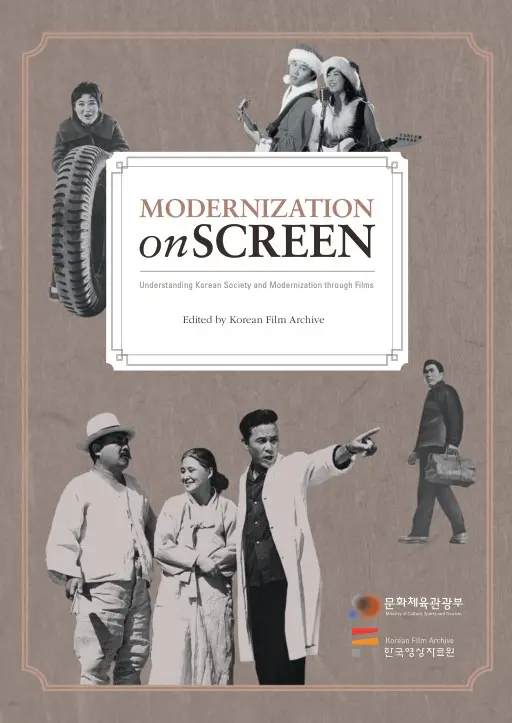
Booklet: Modernization on Screen
The aim of ‘Understanding Korean Society through Films’ project, co-planned and co-produced with the Korean Film Archive and the Ministry of Culture, Sports and Tourism since 2012, is to nurture spectators and researchers of Korean-related topics to better understand Korean history and society. To fulfill such purposes, the selection of eight films each year with each different topics is not solely focused on the mere introduction of films but also on the provision of overviews on Korean society and culture seen from various points of view.
This year’s topic is Modernization on Screen. It is widely known that cinema is the product of the modern age. The apparatus of a camera is based on perspectives, the modern way of viewing, which involves forming of modern subjectivities. Thus, the space of screening the film spread out from the city in which modernization was at its height. Spectators gathered in the theaters and were mesmerized with the modern landscape caught by the camera. They looked for some vitality to escape from the suffocating reality via the magical reality presented on screen.
The eight films, including Mr. Park (dir. Kang Dae-jin, 1960) and other 7 films, which are selected for this year’s project of Modernization on Screen, demonstrate how the modernization and Korean cinema correspond to and clash against each other in a Korean context. Modernization does not merely mean economic developments. It is a generic term for the shifting environments of our age. In this sense, we hope that these films could contribute to the overview of how Korean landscapes, social structures, understanding of the state and communities, family relationships, gender roles, each generation’s sensitivity have changed. We also wish that these films could be referential points for gauging the situation that contemporary Korea is stuck in the so-called “post-modern” age.
Park Sun-young
Korean Film History Researcher
Park Yu-hee
Film Critic, Prof., Korea Univ.
Park Hye-yeong
Researcher, KOFA
Cho Jun-hyoung
Chief Researcher, KOFA
Jeon Min-sung
Korean Film Researcher
Kim Hyung-seok
Film Critic
Lee Yeong-jin
Film Critic
Hwang Miyojo
Film Researcher, Lecturer, KNUA
Korean Film History Researcher
Park Yu-hee
Film Critic, Prof., Korea Univ.
Park Hye-yeong
Researcher, KOFA
Cho Jun-hyoung
Chief Researcher, KOFA
Jeon Min-sung
Korean Film Researcher
Kim Hyung-seok
Film Critic
Lee Yeong-jin
Film Critic
Hwang Miyojo
Film Researcher, Lecturer, KNUA
Greetings 4
Introduction 11
Mr. Park 21
Tosuni: The Birth of Happiness 43
Six Daughters 75
Parade of Wives 111
A Fine, Windy Day143
The Age of Success 171
The Contact 199
Scandal Makers 223
Introduction 11
Mr. Park 21
Tosuni: The Birth of Happiness 43
Six Daughters 75
Parade of Wives 111
A Fine, Windy Day143
The Age of Success 171
The Contact 199
Scandal Makers 223