

Ended
기획전
Films from the 1990s Cinematheque
Period2024-05-14(Tue) ~ 2024-05-24(Fri)Location시네마테크KOFA 1관
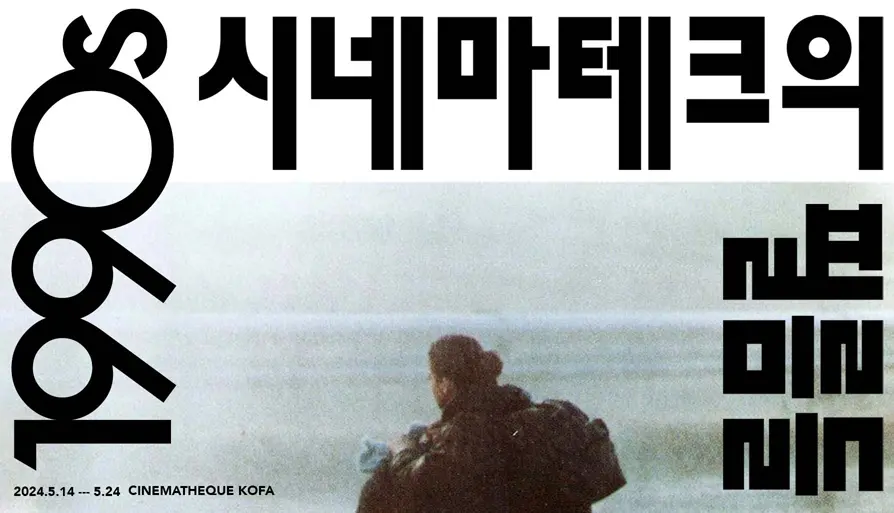
Korea's cinephile culture, which originated from the French and German Cultural Centers in the 1970s, blossomed in the 1990s through small and large film gatherings in the 1980s. Korean cinematheques of the 1990s encompassed a diverse landscape, ranging from private videotechs such as 'Film Space 1895', 'Culture School Seoul', 'CienCie', and 'CineLove' in Seoul, to regional film organizations such as Daegu's 'Movie Hill', 'Seventh Art', 'Amenik', and 'Cult' in Daejeon, Busan's '1/24', Cheongju's 'Cine Odyssey', Gwangju's 'Seeing the World through Film', and Jeonju's 'OngoEul Film Theater', and art cinemas such as 'Dongsung Cinematheque'. The one thing that unites them all is that they are a group of movie lovers immersed in 'Reading films in a new way'. For those who couldn't see the movies they wanted to see because they couldn't pass censorship, were banned from importing them, or didn't have playback devices, cinematheques were a “cinematheque movement” that transcended the dimension of space.
The emergence of cinematheques and cinephiles in the 90s was not a temporary, disconnected event. Their thirst for movies, which was multiplied by gathering in one space since the mid-to-late 80s, led to the growth of Kino and Cine21, which were founded in 1995; international film festivals such as Busan and Bucheon, which appeared in 1996; independent film festivals such as 'Indie Forum' and the '100,000 won Video Film Festival'; and the establishment of the National Association of Cinematheques in 1997 and the formation of the Korean Cinematheque Association in 2002.
The films screened at the cinematheque at the time were programmed in different layers, depending on the goals of each organization. From blackouts such as "Anxiety Eats the Soul" (1974) and "Eraser Head" (1977), which arrived late and staggered from the time of production, to "The Pollen of Flowers" (1972), which sought to rediscover the Korean cinema of the older generation, and "Empire of the Senses" (1976), which was unavailable due to its unconventional water level and the ban on importing Japanese pop culture, Sacrifice (1986), which attracted the world's largest audience; "Mother, Your Son" (1991), whose censorship led to the arrest of its operator; and "City Without Birds" (1996), which was produced by the members of the Cinematheque as part of an audience acceptance movement. These were films that had been explored on video, which had been copied repeatedly and of poor quality, and were later shown in art cinemas and film festivals, generating a renewed enthusiasm.
For cinephiles in the '90s, the experience of screening the films was even more significant in the era of video as the dominant copy medium. The experience of watching a movie on clear film, as opposed to watching it on degraded video, was a completely different experience. This is why the need for public film libraries emerged in the mid-to-late 90s, when the videotech craze was ripe, and why Film Space 1895 and Culture School Seoul ultimately pursued film cinematheque.
In 2024, on the other hand, we can literally watch movies anytime, anywhere. That makes it all the more curious. What does the experience of gathering in a physical space called a cinematheque and watching a movie together on film, the oldest physical support in cinema history, mean to cinephiles today, as it did thirty years ago? Through the meeting of movie lovers in the 1990s and 2024, we will talk about the present and future of the cinematheque and cinephile community.
Talk between the programmer(Hwang Minjin) and cinephile(Kim Hyungseok) from 1990s
Films

 Europa
Director라스 폰 트리에Runtime112 minFormat
English Subtitles


 Ali: Fear Eats The Soul
DirectorRainer Werner FassbinderRuntime92 minFormat
English Subtitles
 My Life to Live
DirectorJean-Luc GodardRuntime82 minFormat
English Subtitles
 Leningrad Cowboys Go America
DirectorAki Kaurism?kiRuntime78 minFormat
English Subtitles
 The Draughtsman's Contract
DirectorThe Draughtsman's ContractRuntime106 minFormat
English Subtitles
In The Realm Of The SensesDirectorNagisa ?shimaRuntime83 minFormat
English Subtitles
 Landscape In The Mist
DirectorTheodoros AngelopoulosRuntime124 minFormat
English Subtitles
 Nostalghia
DirectorAndrei TarkovskyRuntime124 minFormat
English Subtitles
 Stranger Than Paradise, Coffee and Cigarettes: Somewhere in California
DirectorJim JarmuschRuntime100 minFormat
English Subtitles
 Eraserhead
DirectorDavid LynchRuntime88 minFormat
English Subtitles
 The Pollen of Flowers (Hwabun)
DirectorHa Gil jongRuntime83 minFormat